Small Band, Big Sound: Why the Best Digital Studios Run Like Jazz Combos

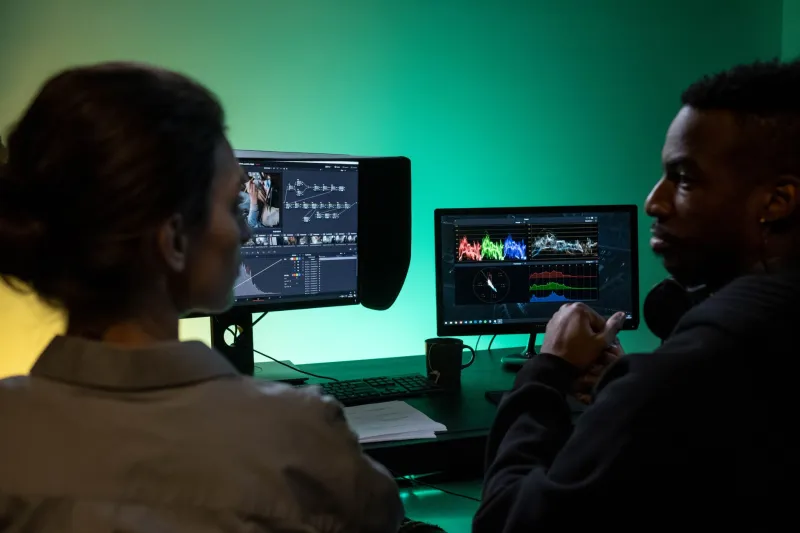
Photo by Photo by Vitaly Gariev on Unsplash on Unsplash
Somewhere in a mid-sized studio in Austin, a four-person team just shipped a motion identity package that's getting passed around design Twitter like a vinyl record at a listening party. No creative director approval chain. No committee. No version forty-seven of a file named final_FINAL_v2_USE_THIS_ONE.ai. Just four people who knew their roles, trusted each other's instincts, and got weird together in the best possible way.
This isn't an accident. It's a structure.
The conversation around team size in creative work has been brewing for years, but digital studios specifically are starting to land on something that feels less like a business framework and more like a musical philosophy. The jazz combo model — small, fluid, everyone soloing and supporting at the same time — is quietly becoming the dominant structure for the studios producing the most interesting work right now.
Why Orchestras Break Down in the Studio
Let's be honest about what happens when creative teams get too big. You've probably lived it. The energy that existed in the early scrappy phase starts to dilute the moment you add a third layer of stakeholders. Decisions slow down. People start optimizing for not being wrong instead of trying to be right. The boldest ideas get sanded into something safe enough that everyone can technically sign off on it.
Orchestras are magnificent, but they require a conductor. Every single musician is executing someone else's vision, and the whole thing collapses without that central authority. That's a fine model for certain kinds of work. It is a brutal model for digital creative production, where the best outcomes usually come from people who are genuinely reacting to each other in real time.
Research on team dynamics consistently points to something called the "social loafing" effect — the tendency for individual contribution to drop as group size increases. In creative contexts, this compounds. When accountability gets diffused across ten people, so does ownership. And ownership, it turns out, is where the magic lives.
The Jazz Quartet Principle
Here's what makes a jazz combo work: everyone is both a soloist and a support player, sometimes within the same eight bars. The bassist isn't waiting to be told when to walk. The pianist isn't checking in before a chord substitution. There's a shared harmonic language, a set of understood rules, and then a tremendous amount of freedom operating inside those rules.
Translate that to a digital studio and you get something like this: a lead art director, a motion designer, a developer, and a strategist — four distinct disciplines, four distinct voices, all fluent enough in each other's craft to know when to step forward and when to lay back. Nobody's redundant. Nobody's waiting on a handoff. The work moves.
Studios like Ordinary Folk in Vancouver and Gunner in Detroit have operated close to this model for years, keeping their core teams intentionally lean while scaling project by project with trusted collaborators. The through-line is always the same: a small nucleus that maintains creative coherence, surrounded by specialists who drop in when the song needs a horn section.
Distinct Roles, Not Rigid Hierarchy
The combo model only works if everyone actually plays a different instrument. One of the most common failure modes in small creative teams is role blur — where the lines between who owns what get so fuzzy that decisions stall out in a fog of collaboration. That's not jazz. That's five people trying to play the same note.
The healthiest small studios are ruthlessly clear about who holds final creative authority on what. The motion designer doesn't need sign-off from the strategist on a timing decision. The art director doesn't get pulled into a conversation about server architecture. These aren't silos — people still talk, still influence each other constantly — but there's a clarity about whose ear is the last one a decision passes through.
That clarity is what creates trust. And trust is what creates speed. And speed, in digital creative work, is often the difference between a project that feels alive and one that feels labored.
When to Add a Fifth Member
The natural question is: when does four become five? Or six? The honest answer is that most of the time, it shouldn't. The studios that maintain the combo model successfully tend to add project-specific collaborators rather than growing their permanent headcount. They bring in a sound designer for one campaign, a 3D generalist for another. The core stays tight. The extended network stays flexible.
This is also where a lot of studios go wrong when they start scaling. They hire to solve a skills gap, which makes sense on paper. But every new permanent hire changes the chemistry of the room. The communication overhead grows geometrically, not linearly — add one person and you don't just add one new relationship, you add a relationship between that person and every existing team member, plus the way each of those existing relationships shifts in response to the new dynamic.
The studios that figure this out early tend to be very deliberate about who becomes a core player versus a recurring collaborator. They're building a band, not a roster.
What This Means for How You Work
If you're running a small digital studio or thinking about how to restructure a team that's lost its spark, the combo model is worth taking seriously. A few things that tend to make it work in practice:
Define the instruments first. Before you think about people, map out the disciplines your work actually requires. Not job titles — disciplines. Motion, concept, code, strategy, narrative. Figure out what your music needs, then cast accordingly.
Build shared language, not shared process. The best small teams don't all use the same tools or follow the same workflow. They share a vocabulary for talking about quality, taste, and creative intent. That's what lets them improvise without losing coherence.
Protect solo space. Jazz combos work because each player has room to develop a voice. If your team structure doesn't give individuals space to bring something distinctly theirs to the work, you'll get competent execution and nothing more.
Know when to call in the horn section. Keeping your core small doesn't mean being precious about it. When a project genuinely needs a skill your team doesn't have, bring someone in. The key is keeping the creative nucleus intact so the collaboration has somewhere coherent to land.
The Sound of Four People Who Trust Each Other
There's something unmistakable about work that comes out of a team operating at this level. It has a coherence that larger productions often can't achieve — a sense that every decision was made by people who were genuinely in conversation with each other, not just executing a brief in parallel. You can hear it in the work the same way you can hear it when a band is really listening.
The studios producing the most interesting digital work right now aren't the biggest ones. They're the ones that figured out the right size for the music they're trying to make — and had the discipline to stay there.