Why the Best Digital Artists Don't Post Right Away — The Power of the Pause
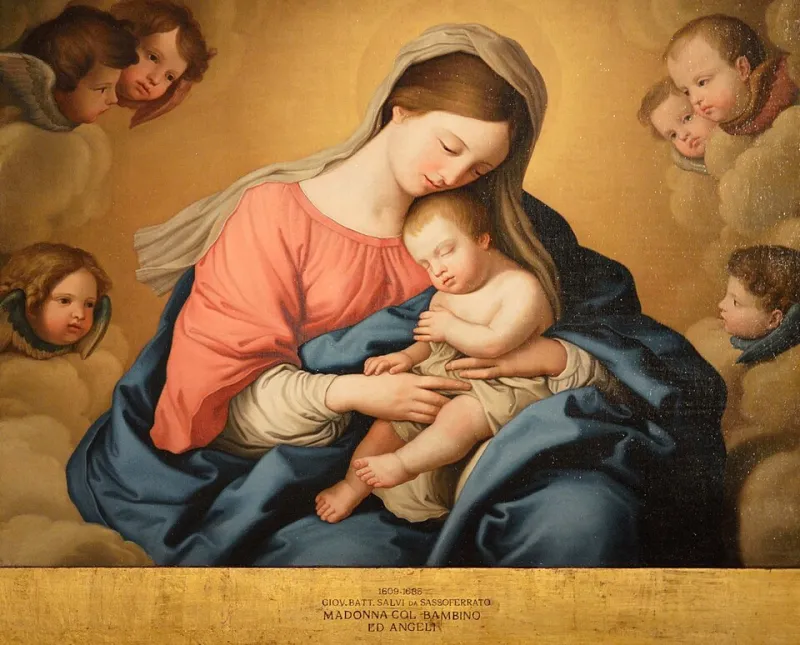
Photo: Giovanni Battista Salvi da Sassoferrato, Public domain, via Wikimedia Commons
You just finished it. The render is clean, the color grading is exactly where you wanted it, the composition finally clicked after three days of obsessive tweaking. Every instinct in your body is screaming at you to post it — to drop it on Instagram, pin it to Behance, throw it on ArtStation, and watch the likes roll in.
Don't.
Not yet, anyway.
Some of the most respected digital artists and studios operating in the US today swear by a deliberate cooling-off window between project completion and public release. Call it the 72-hour rule, call it the pause, call it whatever resonates — the core idea is the same. Finished doesn't mean ready. And learning to tell the difference is one of the sharpest edges a creative professional can develop.
The Dopamine Trap Nobody Warns You About
When you wrap a piece of work you're genuinely proud of, your brain is flooded with a very specific kind of energy. It's triumphant, it's electric, and it's also deeply unreliable as a quality filter.
Creative professionals who've been in the industry long enough will tell you the same thing in different words: the high of finishing a project is real, but it's also a kind of blindness. You've been so deep in the work — so close to every pixel, every frame, every decision — that your brain has essentially memorized it. You're not seeing it anymore. You're recalling it.
That distinction matters enormously.
Jordan Revel, a Brooklyn-based motion graphics artist whose client list includes several major streaming platforms, describes the feeling bluntly: "Right after I finish something, I think it's perfect. Every single time. And about 70% of the time, when I look at it two days later, I find at least one thing I genuinely can't believe I missed."
That's not a confidence problem. That's just how human perception works. Proximity collapses critical distance, and critical distance is exactly what separates a good portfolio piece from a great one.
What Actually Happens During the Pause
The 72-hour window isn't about procrastination or self-doubt. It's a structured, intentional reset. Here's what's actually going on under the hood when you step away from finished work.
Your visual memory resets. When you return to a piece after a couple of days, you're engaging with it more like a first-time viewer. That shift in perspective is invaluable. You'll notice compositional issues, color inconsistencies, or pacing problems that were completely invisible to you in the finishing stretch.
Your ego cools down. There's no gentle way to put this — finishing a hard project makes you protective of it in ways that aren't always rational. A little time and distance lets you evaluate the work more honestly, separate from the emotional investment of making it.
Context becomes clearer. During the pause, you naturally start thinking about where this piece lives in your broader body of work. Does it represent where you're headed creatively? Does it align with the clients or collaborators you're trying to attract? Sometimes a piece is technically excellent but strategically misaligned — and you only see that when you're not in the grip of completion energy.
The Sharing Mistake That Keeps Happening
Let's talk about the specific type of error the pause is designed to prevent: impulsive sharing.
In 2024, the pressure to post constantly is genuinely relentless. Algorithms reward frequency, audiences expect regular content, and the fear of losing momentum is real. But the digital art community has seen enough cautionary tales at this point to know that posting prematurely — sharing work that isn't quite there, or sharing it in the wrong context, or sharing it before you've thought through the framing — can do more damage than the post was ever worth.
Mia Chen, a Los Angeles-based concept illustrator who's worked on projects for several major game studios, put it this way during a panel discussion at a design conference last year: "I posted something once that I was really excited about, like within an hour of finishing it. And I woke up the next morning and saw something in the composition that I couldn't unsee. That post is still out there. That version of the piece is still what people associate with that project. I would've caught it if I'd just waited."
The internet has a long memory. Your portfolio is a living document of your standards. What you put out becomes the benchmark people use to evaluate your work — and your rates, your client quality, and your creative reputation all follow from that.
Building the Habit Into Your Workflow
For artists who are used to posting on impulse, the 72-hour pause can feel uncomfortable at first. It requires a certain amount of faith — faith that the work will hold up, that the moment won't pass, that the audience will still be there.
Here are a few practical ways to make the pause a genuine part of your process rather than just a good intention:
Create a "review queue" folder. When you finish something, export the final version and drop it in a dedicated folder labeled with the date. Set a calendar reminder for 72 hours out. When that reminder fires, open the folder fresh and give it a proper review before anything goes anywhere.
Write your post copy before you look at the work again. Drafting your caption or project description from memory before you revisit the piece is a surprisingly effective way to identify what you actually think the work is about — versus what you were trying to make it about.
Get a second set of eyes. The pause doesn't have to be solitary. Sharing work with one trusted peer during the review window — someone who'll give you honest feedback rather than just encouragement — adds another layer of quality control.
Use the time to think about context. Where does this piece fit in your portfolio narrative? What platform is the right home for it? Is there a better moment to release it — tied to a trend, a conversation, or a cultural moment that would give it more traction?
The Obsessive Craft Angle
At Studio 637, we talk a lot about what it means to pursue obsessive craft — the idea that the work that really endures is made by people who care almost irrationally about the details. The 72-hour pause is one of the clearest expressions of that philosophy we've encountered.
It's a choice to care more about the quality of what you put into the world than the speed at which you put it there. In an industry that often rewards volume, that's a genuinely countercultural stance.
The artists who've built the most durable reputations in digital art, design, and multimedia — the ones whose work you remember, whose portfolios feel cohesive and intentional, whose client relationships compound over years — almost universally describe some version of this habit. The names and the specifics vary. The underlying principle doesn't.
Finished is the beginning of the process, not the end of it. The pause is where craft lives.
Give your work the respect of a second look. The internet will still be there in 72 hours.