Bought It, Broke It, Replaced It: The Endless Upgrade Cycle Draining Digital Studios Dry
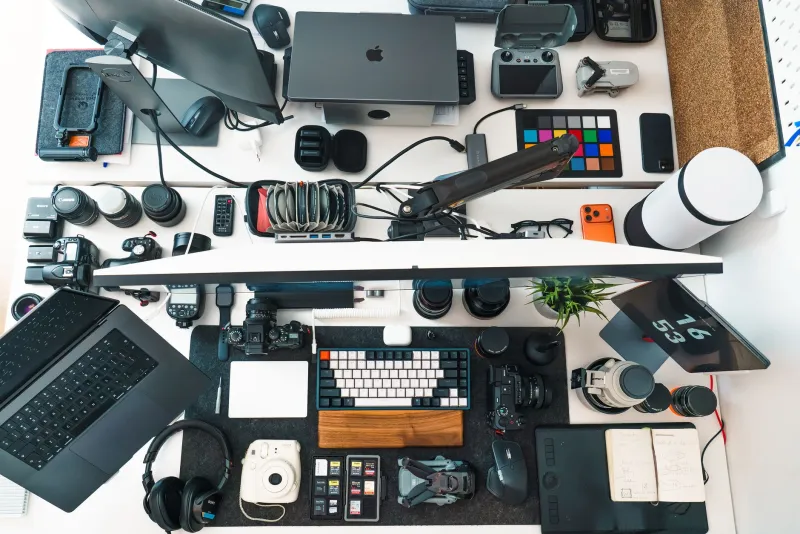
Somewhere in the back of a Brooklyn studio, there's a $4,200 graphics tablet still in its original packaging. The artist who bought it — convinced it would transform her workflow — pivoted to a fully iPad-based setup six months later. The tablet isn't broken. It's just stranded. A monument to a decision that made complete sense at the time.
This is the equipment graveyard. Every studio has one. And nobody talks about how expensive it actually is to maintain.
The Subscription Trap Nobody Warned You About
For a long time, owning your tools felt like a form of security. You bought the software, you owned the license, and that was that. Then the industry shifted — almost overnight, it seemed — toward subscription models. Adobe. Autodesk. Cinema 4D. The list keeps growing. What used to be a one-time investment became a monthly line item that compounds quietly in the background while you're busy trying to make rent on actual project work.
The math, when you finally sit down to do it, can be genuinely unsettling. A mid-size studio running five or six active subscriptions across design, 3D, video, and project management tools might be spending anywhere from $800 to $2,000 a month before a single piece of hardware even enters the conversation. That's not inherently wrong — some of those tools genuinely earn their keep. But a lot of studios are paying for software they use twice a year because canceling feels like admitting defeat.
The psychological weight of the sunk cost is real. Canceling a subscription feels like giving up on a capability. Even if you haven't opened the program in four months.
Hardware Hits Different
Software subscriptions sting, but hardware obsolescence is its own particular kind of painful. Because hardware is physical. You can see it aging. You remember what it cost.
Take render workstations. A well-specced machine in 2021 — one that felt genuinely future-proof at the time of purchase — might already be struggling to keep pace with the GPU-accelerated workflows that have become standard in 2024. The hardware didn't break. The industry just moved. And now you're either running slower than your competitors or you're looking at another five-figure investment on a machine that will, in all likelihood, face the same fate in three years.
Some studios have responded to this by leaning hard into cloud rendering and remote infrastructure — a shift that makes financial sense on paper but introduces its own set of headaches around data transfer, latency, and the uncomfortable feeling of not actually owning your own pipeline. Others have doubled down on hardware ownership, betting that the long-term savings outweigh the upfront cost. Both camps have legitimate arguments. Neither camp has fully won.
When the Platform Bet Goes Wrong
Here's where things get genuinely interesting — and genuinely painful. Some studios don't just buy tools. They build their entire identity around them.
There's a motion design studio out of Austin that spent the better part of three years developing proprietary workflows inside a specific real-time rendering environment. They invested in hardware optimized for that platform, trained their team around it, and marketed themselves as specialists. Then the platform shifted its pricing structure and deprecated several key features that their workflow depended on. Overnight, their competitive advantage became a liability.
This isn't a rare story. It's almost a rite of passage. Studios that built deep expertise in Flash. Studios that went all-in on specific VR platforms that never achieved mainstream adoption. Studios that optimized for hardware specs that the next generation of software made irrelevant. The graveyard fills up fast when you're betting on specific ecosystems rather than transferable skills.
The studios that seem to navigate this best share a common trait: they distinguish between tools and craft. The tool is replaceable. The underlying creative and technical thinking isn't. When a platform shifts, those studios retool faster because they're not mourning the loss of an identity — just a workflow.
The Case for Strategic Obsolescence
Here's a counterintuitive take worth sitting with: not all obsolescence is waste.
Some of the most interesting work coming out of small digital studios right now is being made on older hardware and discontinued software — not out of necessity, but out of intention. There's a growing contingent of artists who've decided that the relentless chase for the newest tool is actually working against their creative output. That constraints produce interesting results. That a machine that can't run the latest real-time renderer forces you to solve problems differently.
This isn't nostalgia for its own sake. It's a recognition that the upgrade cycle, left unchecked, can become a distraction. You spend your time learning new tools instead of deepening your mastery of existing ones. You optimize for capability rather than output. The gear improves. The work, sometimes, doesn't.
That said, there's a difference between strategic restraint and genuine paralysis. A studio running outdated software because they can't afford the upgrade is in a different position than one making a deliberate choice to work within constraints. The former is a financial problem. The latter is a creative philosophy.
Finding a Smarter Relationship with Your Tools
So what does a healthier approach actually look like? A few patterns show up repeatedly among studios that seem to have figured out a more sustainable rhythm.
Audit before you upgrade. Before renewing a subscription or buying new hardware, actually look at how much you used the existing tool in the last six months. Not how much you intended to use it. How much you actually did. The answer is often clarifying.
Separate exploration from production. Some tools are worth having access to for experimentation even if they don't anchor your core workflow. The mistake is treating every exploratory tool as a production investment — and then feeling obligated to justify it with billable work.
Build for portability. The studios that weather platform shifts best are the ones whose core skills aren't locked to a single ecosystem. That means investing in learning principles, not just software. Understanding rendering theory, not just Cinema 4D. Understanding color science, not just Lightroom.
Let things die. The equipment graveyard only becomes a problem when you're still paying rent on it. Cancel the subscriptions you're not using. Sell the hardware you've outgrown. The psychological relief alone is worth something.
The upgrade cycle isn't going anywhere. The software companies are not going to stop releasing new versions, and the hardware manufacturers are not going to stop shipping faster machines. But the studios that thrive aren't the ones with the newest everything. They're the ones who've figured out which tools actually serve their work — and which ones are just expensive company.