Cutting the Cord: How Small Studios Are Winning Big by Walking Away from Enterprise Infrastructure
There's a particular kind of anxiety that lives inside every small digital studio's billing cycle. You know the one. It's the moment you open your cloud platform invoice and spend thirty seconds convincing yourself the number can't be right — before accepting that yes, it is, and yes, you agreed to this.
For years, the assumption has been that serious creative output requires serious infrastructure. Big render farms. Enterprise licensing agreements. Cloud solutions with names that sound like pharmaceutical brands. The logic made a certain kind of sense: if the major studios use it, it must be the right tool for the job.
But something's shifting. Quietly, and then all at once, boutique digital studios across the country are walking away from that model — and finding that the grass on the other side is not just greener, it's significantly cheaper to maintain.
The Math That Finally Broke the Spell
Let's talk numbers, because that's usually where this story starts.
Cloud rendering costs scale fast. A mid-size project with complex lighting and high-res outputs can rack up thousands of dollars in compute time on a major cloud platform — costs that don't care whether your client pays on time or whether the revision round added three weeks to the schedule. You're paying for uptime whether you're using it or not, and when crunch hits, you're paying even more.
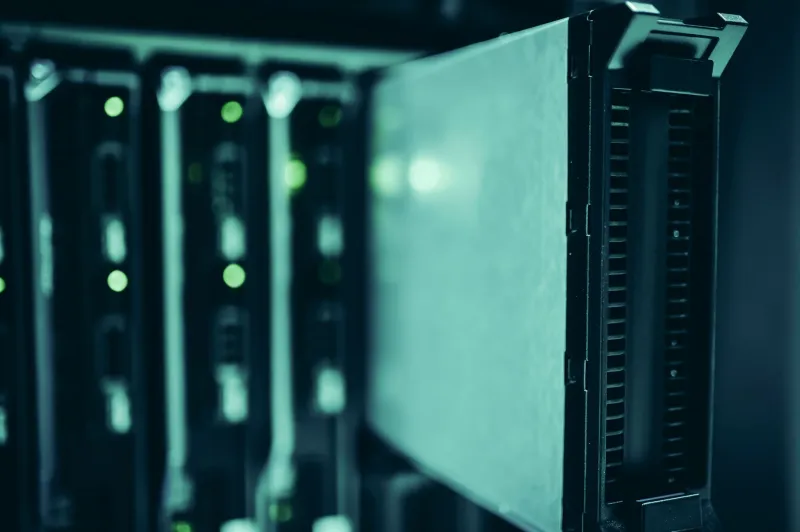
Contrast that with the economics of a self-hosted render farm built from consumer-grade or prosumer hardware. The upfront cost is real, but studios that have made the switch consistently report breaking even within twelve to eighteen months. After that, the margin difference is significant enough to reinvest in actual creative work — new hires, better equipment, experimental projects that don't need to justify their existence to a budget spreadsheet.
One designer we spoke with, running a three-person motion graphics studio out of Austin, put it simply: "We were basically renting a house we could have bought twice over. It just took us too long to do the math."
Open Source Isn't a Compromise Anymore
The software side of this conversation has changed dramatically over the last few years, and it's worth slowing down to acknowledge how much.
Blender, once the scrappy underdog that professionals politely ignored, is now doing production-level work that would have required a five-figure software license not long ago. The community around it has grown into something genuinely impressive — tutorials, plugins, render optimization guides, and a user base that includes people who've shipped work for major streaming platforms and ad campaigns.
Beyond Blender, the open-source creative ecosystem has matured across the board. DaVinci Resolve's free tier punches well above its price point. Kdenlive and Natron are finding homes in studios that would have laughed at them five years ago. Even pipeline tools and asset management solutions have credible open-source alternatives that, with some configuration work, hold up to professional demands.
The key word there is "configuration." This path isn't plug-and-play. It asks something of you — technical curiosity, a willingness to read documentation, maybe a weekend or two getting things set up the right way. But studios that have made that investment tend to talk about it the way people talk about learning to cook instead of ordering out. The effort pays back in ways that go beyond the obvious.
Creative Control as a Feature, Not a Bonus
Here's the part that doesn't show up in the financial projections but matters just as much.
When your rendering pipeline runs on your hardware and your software stack is something you actually understand, you have a different relationship with your creative process. You're not waiting on a cloud queue that deprioritizes your job because three larger clients just submitted. You're not locked into a software update cycle that changes your interface two weeks before a deadline. You're not subject to terms-of-service changes that affect how you can store or share your own work.
That kind of control is hard to quantify, but studios that have moved in this direction describe it in almost physical terms — like a weight they didn't notice until it was gone. There's something about owning your tools that changes how you use them. You tinker more. You optimize more. You understand your own workflow at a level that makes you better at the actual creative work.
It also changes client conversations. Studios that run leaner, self-contained infrastructure often find they can price projects more competitively without sacrificing margin, which opens doors that the enterprise-cost model quietly kept closed.
What You're Actually Giving Up
It would be dishonest to frame this as a pure win with no tradeoffs, so let's be straight about what the switch actually costs.
Scalability is the real one. If you land a project that suddenly needs ten times your usual compute power, a cloud platform can accommodate that overnight. A self-hosted farm cannot. Studios that take on highly variable workloads — big commercial campaigns followed by quiet months — may find that the flexibility of cloud rendering justifies the premium, at least for specific project types.
There's also the IT reality. Someone on your team, or someone you hire, needs to maintain this stuff. Hardware fails. Network configurations drift. Software dependencies get weird. If your studio is genuinely tiny and everyone is heads-down in creative work, adding infrastructure management to the plate is a real cost even if it doesn't show up on an invoice.
And some enterprise tools genuinely don't have open-source equivalents worth recommending yet. Specialized simulation software, certain compositing workflows, proprietary asset libraries — there are corners of the production pipeline where the open-source ecosystem is still catching up.
The Studios That Are Making It Work
The pattern among studios successfully running this model tends to look similar regardless of their focus area. They're small — usually two to eight people. They have at least one person with genuine technical interest who enjoys the infrastructure side of things. They've taken the time to audit their actual workflow needs rather than defaulting to whatever the industry standard recommendation is. And they've built in a realistic runway for the transition rather than trying to flip the switch overnight.
They're also, notably, doing excellent work. The assumption that boutique infrastructure means boutique output hasn't held up. Some of the most visually striking motion design, 3D art, and digital production coming out of independent studios right now is running on hardware that cost less than a single month of enterprise cloud time.
That's not an argument that every studio should make this move. It's an argument that the decision deserves a real look — not a dismissal based on assumptions about what professional-grade creative work requires.
The cord was never load-bearing. Some studios are just now figuring that out.