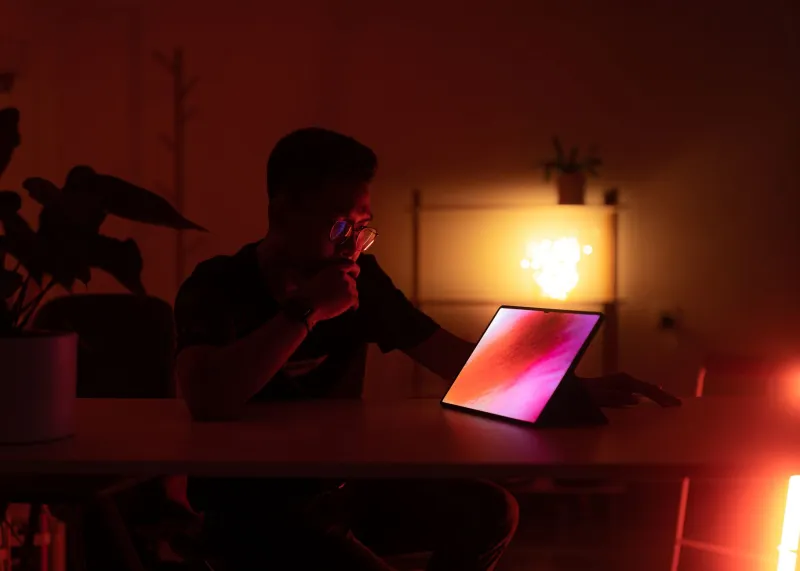
Invite Only: How the Smartest Digital Studios Decide Who Gets Through the Door

There's a version of creative culture that treats openness like a virtue in itself. Share everything. Collaborate constantly. Keep the feedback loop running hot. It sounds generous, maybe even enlightened — until you watch a genuinely original concept get committee'd into something completely unremarkable.
The studios producing the most distinctive digital work right now? They're doing something that looks almost antisocial from the outside. They're being picky. Not precious, not difficult — just deliberate about who gets a seat at the table, and more importantly, when.
The Myth of the Always-Open Studio
Collaboration has been sold as an unqualified good for so long that questioning it feels almost counterproductive. And sure, there's real value in bringing in outside perspectives. Fresh eyes catch blind spots. Cross-disciplinary input pushes work in directions a solo creator wouldn't find alone.
But here's what gets glossed over: collaboration has a timing problem. Bring someone in too early, and you're handing a half-formed idea to a person who has no attachment to it — and every reason to reshape it toward something more familiar, more comfortable, more theirs. The original spark doesn't survive that kind of exposure. It needs to harden a little first.
Think about how a glassblower works. The molten glass is endlessly shapeable at first — that's also when it's most vulnerable. You don't hand it to someone else while it's still that soft. You work it yourself until it has enough structure to withstand outside contact. Creative work isn't all that different.
Stage-Gating the Creative Process
The studios that navigate this best tend to operate in phases, with different collaboration rules for each one.
In the early conceptual stage, the circle is tight — sometimes just one or two people. This isn't elitism; it's protection. Ideas at this stage are weird and fragile and often hard to articulate. Exposing them to too many voices before they've developed any internal logic is a reliable way to sand off exactly the edges that made them interesting.
Once the concept has some bones — a clear direction, a visual language that's starting to cohere — that's when selective outside input becomes genuinely useful. This is the phase where a trusted collaborator can stress-test assumptions without dismantling the whole structure. The key word is trusted. Not just talented. Not just available. Someone who understands what the work is trying to do and cares enough to push it toward that goal rather than toward their own aesthetic comfort zone.
By the time a project hits production, the collaboration model shifts again. Now it's about execution, and the right contributors are specialists — people brought in for specific skills, not for creative direction. The vision is set. What's needed is craft.
Who Actually Gets In
So what makes someone the right collaborator at the right time? It's less about résumé and more about orientation.
The collaborators worth inviting in are the ones who ask questions before they make suggestions. They want to understand the intention behind a choice before they propose changing it. They're comfortable with work that doesn't look like anything they've seen before — actually comfortable, not just claiming to be. And critically, they know how to disagree without needing to win.
The collaborators who tend to cause problems — even talented, well-meaning ones — are those who arrive with a strong prior sense of what the work should be. They're not responding to what's in front of them; they're pattern-matching to something from their own creative history. That's not collaboration. That's a slow-motion takeover.
The best studios have learned to recognize the difference quickly, and they've built informal systems for filtering. Some rely on trial projects — low-stakes work that reveals how someone operates under uncertainty. Others are blunt about it upfront: here's the concept, here's what we're not willing to compromise on, are you still interested?
The External Pressure to Open Up
There's real social pressure pushing against this kind of selectivity, especially in the digital space. Platforms reward visibility and community engagement. There's a whole content genre built around creative transparency — the behind-the-scenes post, the work-in-progress share, the open critique session. None of that is inherently bad. But it creates an ambient expectation that creative work should be porous, that closing the door is somehow suspicious.
Studios that resist this pressure tend to be quieter online, at least during active development. They're not mysterious for the sake of mystique — they're just not willing to let the audience shape the work before the work knows what it is yet. The behind-the-scenes content comes later, after the project has enough solidity to absorb the attention without being deformed by it.
There's also a business dimension here that doesn't get talked about enough. Selective collaboration is partly about protecting creative integrity, but it's also about protecting the studio's identity in the market. If every project is a free-for-all of outside influence, the studio stops having a recognizable voice. And in a space as crowded as digital design and multimedia, a recognizable voice is one of the few things that actually builds long-term equity.
Knowing When to Unlock the Door
None of this means isolation is the goal. The studios doing the most interesting work aren't hermetically sealed — they're strategically permeable. They know the difference between the kind of solitude that lets a concept develop and the kind of insularity that lets bad ideas go unchallenged.
The healthiest version of this practice looks something like trust-building over time. A studio develops relationships with a small network of collaborators who have earned access — people who've proven they can engage with work honestly without trying to colonize it. That network grows slowly, through experience, not through open calls or networking events.
It's a slower model than the always-on collaboration culture that gets celebrated in most industry conversations. It produces fewer projects, sometimes. But the projects it does produce tend to have something that's increasingly rare in digital work: a point of view that actually belongs to someone.