What's in a Number? How Apartment Digits and Highway Exits Became Studio Names
Here's a fun party trick for your next creative mixer: ask a room full of studio owners how they picked their name. Half the answers will involve a real address. The other half will involve a parking situation.
We're not exempt. Studio 637 exists because somebody, at some point, worked in a space with those digits on the door — and the name stuck the way good names do, half by accident, half by stubbornness. But the longer we've carried it, the more we've realized something kind of fascinating: a studio name is doing way more work than most of us give it credit for.
The Apartment Number Industrial Complex
Spend ten minutes browsing agency directories and you'll spot the pattern immediately. Room numbers. Suite digits. Floor designations. It's practically a genre.
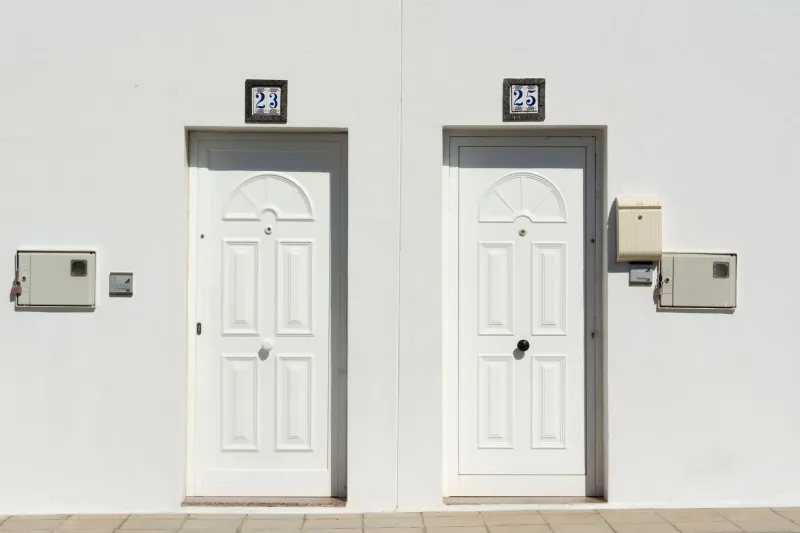
There's a reason for it. A number like ours feels specific in a way that abstract names don't. "637" implies a real place — a door you could knock on, a landlord, probably a finicky HVAC system. In an industry that's increasingly remote and digital-first, that little hit of physicality is quietly reassuring. Clients aren't just hiring talent; they're hiring a somewhere.
There's also a humility baked into it. Nobody names their studio after an apartment number because they think they're the biggest shop in town. The number says, we're a crew, not a conglomerate. For the design-conscious clients who read sites like this one, that's often exactly the vibe they're shopping for.
The Origin Stories Are Better Than the Names
The best part of this naming convention is that the stories behind the names are usually unhinged in the best way.
There are studios named after highway exits because that's literally where the founders turned off to get to the office. Studios named after defunct modem speeds and dial-up sounds, worn like a badge by founders who remember waiting for a page to load. Studios named after the suite number the landlord refused to change on the lease, so everyone just gave up and leaned in.
These names work because they're true. And truth, in a market saturated with agencies called things like Luminary Collective and Apex Vision Labs, is a genuine differentiator. You cannot fake a story about why your studio is called Exit 14. Either the exit is real or it isn't.
What Your Name Says Before You Say Anything
Here's where it gets interesting. A studio name is the first piece of design work a client ever experiences from you, and like all design, it sets expectations.
Run the test yourself. Say your studio name out loud, then imagine the invoice attached to it. Does the math feel right? A whimsical name paired with enterprise pricing creates friction. A dead-serious name paired with playful work creates confusion. None of these mismatches are fatal, but they're all friction, and friction costs you conversations you'll never know you lost.
Numbers have their own psychology too. Short numeric names feel nimble and technical — good for motion, 3D, and dev-adjacent work. Wordy, evocative names feel editorial — a fit for brand and illustration studios. Neither is better. But pretending the signal doesn't exist is how studios end up attracting the wrong briefs for years.
A Quick Stress Test for Your Own Name
If you're naming a studio — or quietly wondering whether yours is helping or haunting you — here's the checklist we'd actually use:
- The phone test. Say it on a call. Can the other person spell it without asking twice? If your name requires a spelling bee, that's fine — but know you're paying a small tax on every intro.
- The invoice test. Does it sit comfortably next to your rate card? Names carry an implied price tier whether you like it or not.
- The story test. Is there a real story behind it, and does the name survive being told? Names with origins age well. Names invented in a naming-sprint spreadsheet age like milk.
- The search test. Google it. All of it. In quotes. What comes up? If you share a name with a dental chain in Ohio, you'll be doing SEO penance forever.
- The ten-year test. Will it still fit when the studio is twice the size, or half the size, or doing entirely different work?
The Name Isn't the Brand — But It's the Doorway
None of this is to say a name makes or breaks a studio. Plenty of shops with terrible names do brilliant work, and the work always wins eventually. But "eventually" is doing a lot of lifting in that sentence.
A name is the doorway. It doesn't have to be beautiful. It doesn't have to be clever. It just has to be open in the right way — specific enough to feel real, honest enough to feel human, and memorable enough that when someone says "you should talk to those people," the other person actually remembers it.
Room 637 opened a lot of doors for us, metaphorically speaking. Weirdly, it all started with a literal one.