Motion Designers Quietly Won the Attention War (And Nobody Threw a Parade)
Unpopular opinion, delivered with love: the most important storytellers of the last decade aren't filmmakers. They're not UX researchers. They're motion designers — the folks who live and die by the uncomfortable truth that you have about ninety seconds, maybe less, before a thumb keeps scrolling.
Filmmakers get two hours and a dark room. Novelists get a cover and the benefit of the doubt. Motion designers get nothing. They start every project in a deficit, with an audience that owes them zero patience. And yet, somehow, they've become the most imitated storytellers on the internet.
Earning Every Second Is a Discipline, Not a Slogan
Here's what outsiders miss about motion design: it's not animation for animation's sake. It's a brutal editorial process dressed up in easing curves.
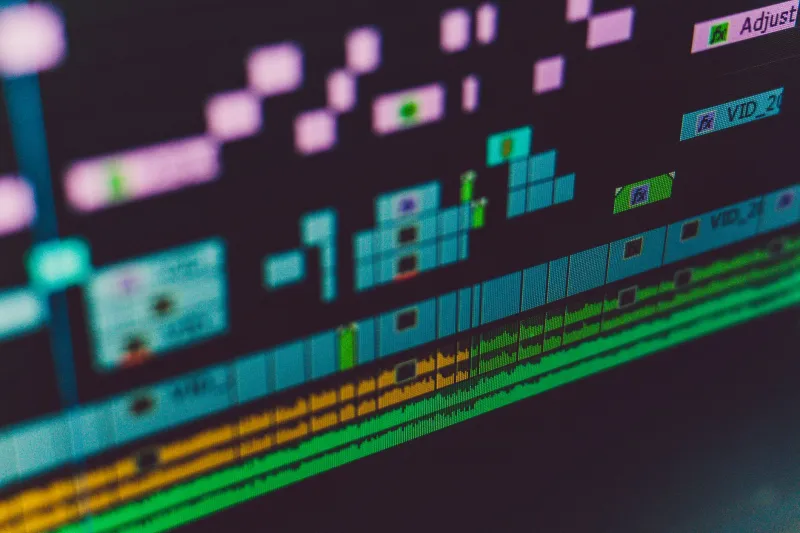
When your entire medium is measured in seconds, you develop a ruthless instinct for what earns its runtime. Every transition is a question — does this need to exist? Every title card is on trial. Motion designers cut ruthlessly not because they're minimalist by taste, but because the format punishes indulgence instantly and publicly. A film can meander for ten minutes and recover. A social explainer that meanders for ten seconds is dead on arrival.
That constraint produced a craft. And crafts, as we've seen repeatedly across creative history, eventually get borrowed by everyone who lacks them.
The Great Motion Design Land Grab
Look around and you'll see the techniques everywhere, usually without attribution.
Newsrooms figured this out years ago. The best explainer journalism — think the animated data breakdowns from major outlets — is essentially motion design with a byline. Complex stories about supply chains, elections, or economics now arrive as sixty-second kinetic graphics, because editors finally accepted that a static chart and a paragraph of context were losing to a well-timed zoom.
Education is the same story. The edtech boom wasn't just about access; it was about format. The most effective online courses look suspiciously like a motion designer's storyboard — tight segments, constant visual feedback, zero wasted frames. Attention is the scarce resource in a lecture hall and a feed alike, and motion design is the only discipline that built its grammar specifically for scarcity.
Brands, naturally, got there fastest and least gracefully. Every product launch now ships with a ninety-second hero animation, a fifteen-second cutdown, and a six-second bumper. That ladder — one idea, three rungs — is pure motion design thinking. The agencies that execute it well are, whether they admit it or not, staffed by people trained in the discipline of compression.
What Traditional Creatives Should Steal
If you work in any format with generous runtime — film, long-form writing, a keynote, a podcast — the motion design mindset offers a few uncomfortable gifts:
Edit against your own opening. Motion designers assume the first frame is the moment of maximum risk. Most filmmakers treat the first ten minutes as a runway. Flip that assumption and watch your work tighten up.
Design for the exit, not the entrance. In motion work, you're always one swipe from abandonment. That pressure creates clarity. Ask yourself what would make someone stay if leaving were effortless — because on most platforms, it is.
Treat compression as a creative act. There's a snobbery in some traditional circles that short-form work is lesser work. Having watched motion designers spend three weeks on eight seconds, we can report the snobbery is unearned. Saying less, better, is not the shallow end of the pool.
The Craft Behind the Swipe
None of this means long-form is doomed — humans still binge entire seasons in one sitting, and the feature film isn't going anywhere. It means the unit of attention has permanently shrunk, and the people who built their skills at that scale hold the playbook.
So the next time a brand video hooks you in four seconds, a news graphic explains an election in a minute flat, or an online course keeps you past your bedtime — tip your cap. Somewhere, a motion designer earned every one of those seconds, and the rest of the creative world is finally taking notes.